
Ripley County Multi-Day Arrest Reports
The Ripley County Sheriff's Office runs no multi-day online blotter. The gap falls to regional news. E Communications Network publishes a weekly arrest report plus a monthly sheriff blotter. Both compile incidents after the fact. Entries may carry names, ages, and home cities. Charges, bond amounts, or release details can appear in the same entry. The publisher presents the material as sheriff reporting. EComm remains a regional news outlet, though, not the sheriff's live database.
That difference shapes every conclusion. A weekly report can surface a missed arrest. The name may have dropped off a current custody search. A monthly piece covers a wider window. Neither proves a person still sits in the Ripley County Detention Center. Publication can lag the arrest, booking, bond, or release by days. The publisher states no fixed update hour or guaranteed archive policy.
The EComm weekly Ripley arrest report shows the kind of multi-day local reporting available.
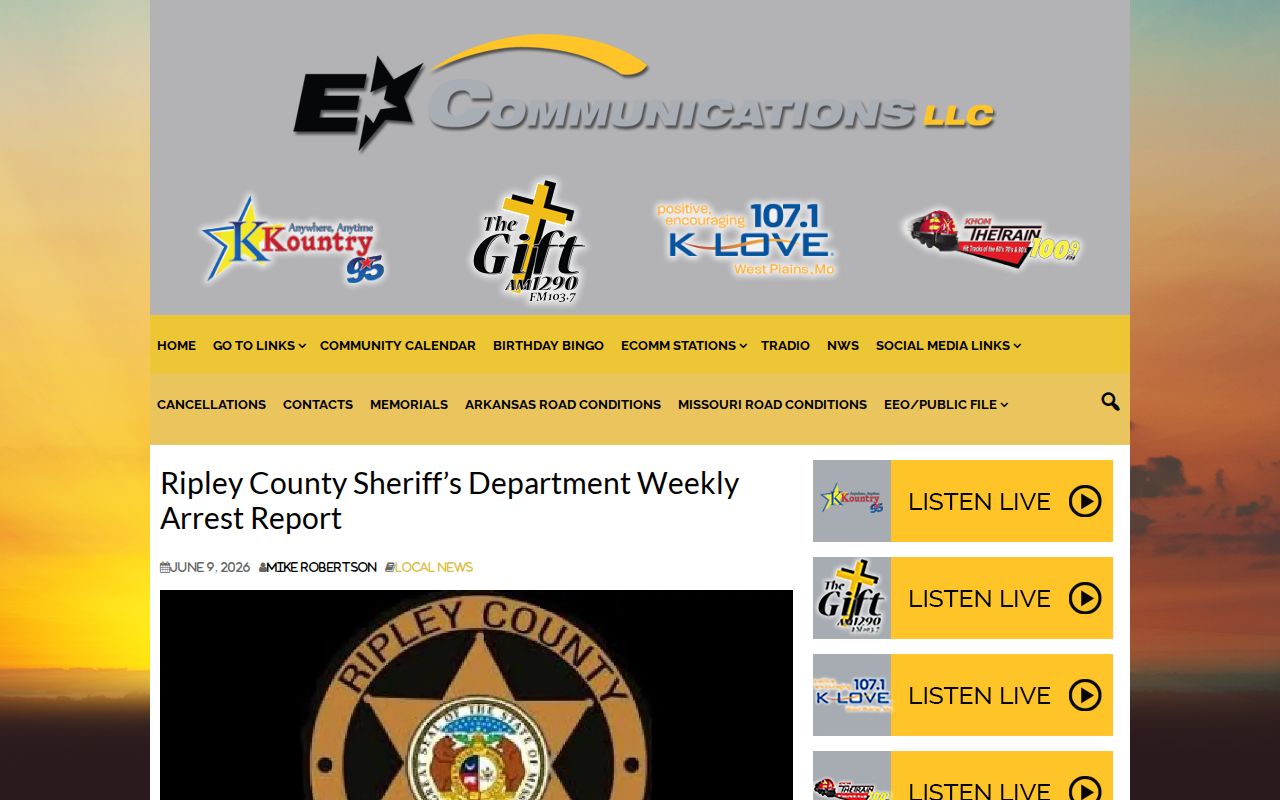
A dated lead, not a live county custody list.
Read Ripley Arrest Reports Carefully
Work from the report period back to the official record. Keep four dates separate: incident, arrest, booking, publication. A single article may name only one or two. A home city is not an arrest location either, and a Doniphan or Naylor address says nothing about where the booking happened.
- Open the dated EComm weekly report or monthly blotter and identify the period it claims to summarize.
- Match the full name with age or city only when the story supplies those details. Do not combine facts from an unrelated same-name result.
- Record the arresting agency and charge exactly as published, preserving words such as accused or charged.
- Check any bond or release wording as a dated event, not a guarantee of current custody.
- Request the underlying booking or arrest record from RCSO or the arresting agency, then use Missouri Case.net for later court activity.
Need today's custody answer? Take the Arrested Today route instead. That page points to MSHP's rolling official search, MOVANS, and direct sheriff confirmation. The arrest-report window serves multi-day research, not same-day results.
Fields in Ripley Arrest Reports
The news reports carry useful details. Fields vary by article. A blank field never proves an event skipped the county, so each common item deserves its proper limit.
| Reported field | How to interpret it |
|---|---|
| Name and age | Identity clues from the article; confirm against the agency record before linking similar names. |
| City | A stated residence or event location only when the report says so; never infer which jail holds the person. |
| Arresting agency | The sheriff, city police, MSHP, or another named body connected to the event. |
| Arrest or report date | Dates that must remain distinct from booking and publication dates. |
| Alleged charge | Booking or report language that can later be amended, declined, dismissed, or resolved in court. |
| Bond | A conditional release term at a stated time, not a fine and not evidence of guilt. |
| Release detail | A past event reported by the outlet; it does not guarantee the person’s status now. |
| Photo | Often a generic or incident image. It is not proof of an official county mugshot gallery. |
When a field matters, trace it to its creator. RCSO may hold a booking sheet, arrest register, jail activity log, or inmate file. City and state agencies keep their own arrest reports. The court docket sits at a later judicial layer, which is why these records can differ.
Ripley Arrest News Is Selective
EComm anchors regional Ripley arrest news. Its category page tracks new posts. The weekly and monthly pieces hold the dated detail, and the EComm news index shows that publisher context.
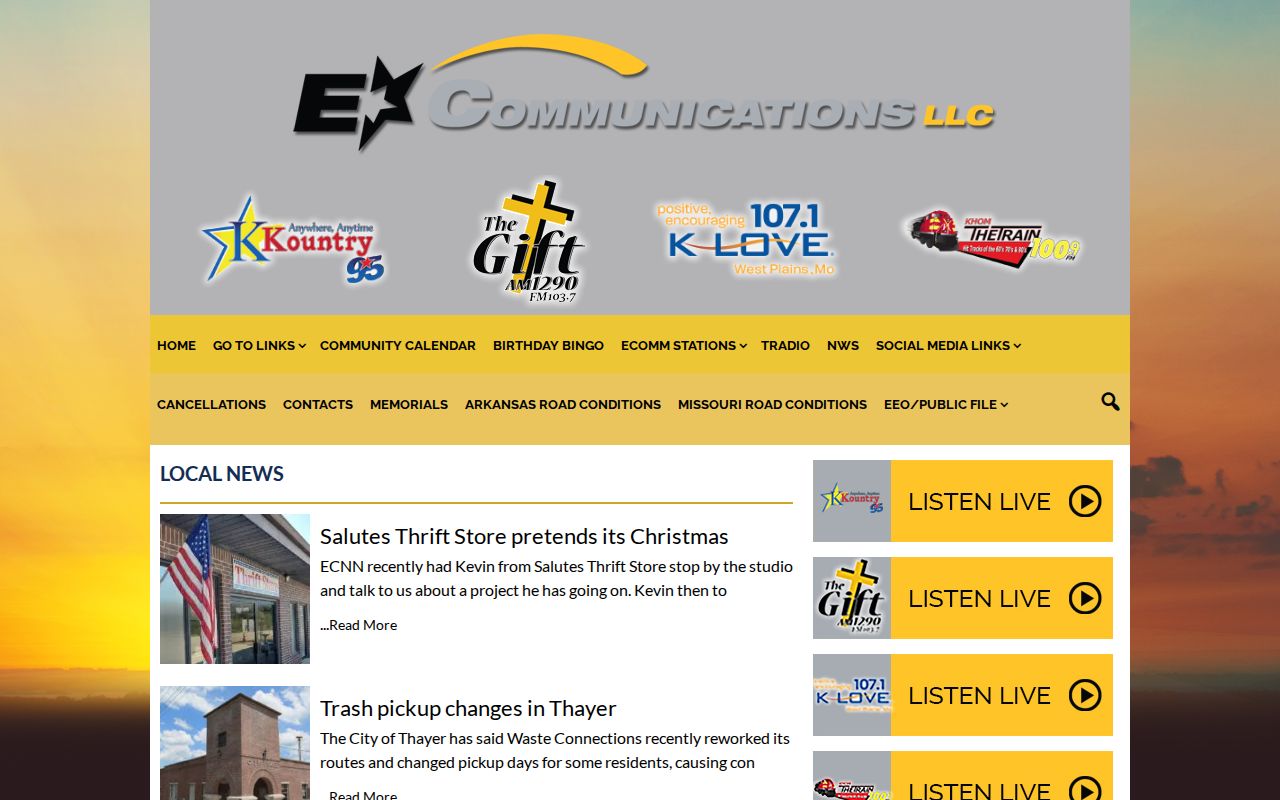
The category page spans many regional subjects. Find a Ripley-specific story and note its publication date.
Ripley Gazette is the main county-local newspaper lead. The paper runs no dedicated arrest roster or mugshot section. KAIT8 and KWOC publish selected regional crime stories. Those outlets may explain a serious incident or name an agency. Editor selection makes them incomplete by design. A missing story never proves an arrest did not occur.
Doniphan and Naylor are the county's only incorporated cities, per the 2020 place map cited. Reports may mention Fairdealing and Oxly. Those place names deserve no city label. They describe local coverage, not jurisdiction or custody.
Unofficial Ripley Arrest Archives
Private sites come last, after official records and local reporting. Mugshots.com keeps a county-local Ripley page of older records. Its freshness and image sources go unmarked as any official county feed. RecentlyBooked and Arrests.org offer Missouri indexes without a Ripley section. Busted Newspaper lists no Ripley County page. Neither does Mugshots.zone. A generic state page is not local coverage.
For a county-local news lead rather than a booking roster, the Ripley Gazette regional headlines page fits. It tracks area headlines rather than bookings.
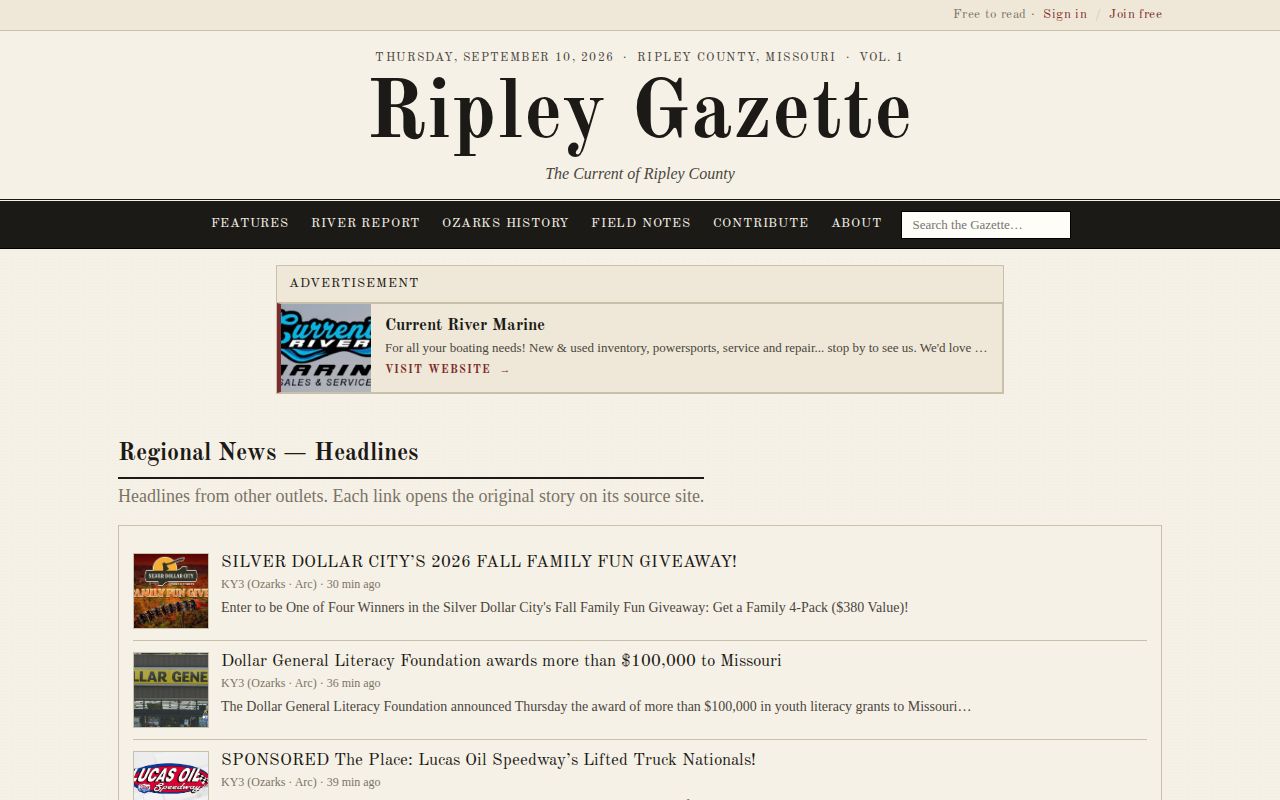
Stories from that page need the same agency, date, custody, and court checks as any secondary account. Private archives go stale. They can be plain wrong. Neither can confirm who is in custody now. Start with RCSO, MSHP, MOVANS, or the arresting agency, then treat a private result as a lead compared against the official booking record and later disposition.
Request Older Ripley Arrest Records
Missouri sheriffs must keep arrest records and booking sheets for at least five years. Jail activity logs follow the same minimum. So do inmate files, counted from the release date. Retention rules do not force anything onto a public website. Agencies may hold material longer. An open case or pending litigation can also change what is available. Anyone seeking older Ripley County arrest records should send a narrow Sunshine Law request. Address it to the office that holds them. Name the person, the date range, and the record type wanted. Include the agency too, if known. Examples include an arrest log entry, a booking sheet, or a jail activity record. Missouri guidance lets an agency decline to build a new report or spreadsheet. If parts get withheld, request the legal basis plus any portion that remains public.
- Booking sheet
- The intake record for a specific arrest and booking event.
- Arrest log
- An agency record of arrests, sometimes called an arrest register.
- Disposition
- The later court outcome, such as dismissal, plea, acquittal, or judgment.
- Retention minimum
- The least required preservation period, not a promise of permanent online access.
Older Ripley County history lives in state collections. The Missouri State Archives Ripley guide points to historic circuit-court criminal files. Indexes are included too. The State Historical Society newspaper directory lists historical Ripley County titles. It also notes where copies are held. Neither archive tracks who is in jail today. For modern booking questions, start with RCSO or the arresting agency.
Note: A five-year retention minimum guarantees neither five years of online searchability nor destruction right after.
Verify Ripley Arrest Outcomes
An arrest report freezes one moment. It shows who was arrested and when. Missouri Case.net and the 36th Judicial Circuit clerk can add docket details later if a public case was filed. A search that returns nothing may reflect timing, sealing, juvenile limits, or simply no filed case. That empty result does not disprove the arrest itself.
Use precise labels when updating an old report. Released, transferred, charge dismissed, and convicted are all different events. Each needs an authoritative dated source. When the official agency or court corrects a record, that correction outranks an older news item or private archive entry.